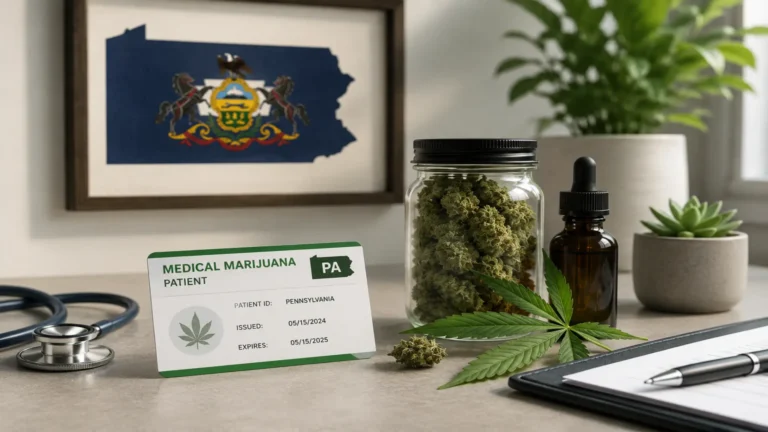
If you’re thinking on how to get a medical marijuana card in Pennsylvania, you’re in the right place. The process involves state registration, a licensed physician certification, and a final card issuance , all designed to help qualifying patients legally access medical cannabis under the oversight of the Pennsylvania Department of Health.
Pennsylvania does not currently offer recreational cannabis, so a medical marijuana card is the only legal way to obtain cannabis products from dispensaries across the state.
If you’re thinking on how to get a medical marijuana card in Pennsylvania, you’re in the right place. The process involves state registration, a licensed physician certification, and a final card issuance , all designed to help qualifying patients legally access medical cannabis under the oversight of the Pennsylvania Department of Health.
Pennsylvania does not currently offer recreational cannabis, so a medical marijuana card is the only legal way to obtain cannabis products from dispensaries across the state.
To begin the process for how to get a medical marijuana card in Pennsylvania, you must be a resident of Pennsylvania and at least 18 years old. The state requires proof of residency, typically a valid Pennsylvania driver’s license or state ID with your current address.
Children under 18 may participate, but only through a registered caregiver who can obtain a card on their behalf and make purchases for them.
The Pennsylvania Medical Marijuana Program recognizes a list of “serious medical conditions” that may qualify you for a card. Common qualifying conditions include chronic pain, cancer, glaucoma, epilepsy, HIV/AIDS, Parkinson’s disease, PTSD, and Crohn’s disease.
It’s important to review the list before proceeding; a licensed physician will assess your health history to determine if your condition fits the state’s criteria.
Before seeing a medical provider, you should register in Pennsylvania’s Medical Marijuana Program through the official registry website.
This step gives you a patient ID number, which you’ll use throughout the process, and allows the doctor to submit your certification electronically once you’re approved.
To learn how to get a medical marijuana card in Pennsylvania, you must be evaluated by a doctor who is approved to certify patients in Pennsylvania. This evaluation can be done online through telehealth, making it more accessible for many patients.
During the appointment:
Once you’re certified by the doctor, you’ll receive instructions from the state registry to complete payment for your medical marijuana ID card. The annual fee is $50, though patients enrolled in certain assistance programs (like Medicaid or SNAP) may qualify for a reduced or waived fee.
After payment, the Pennsylvania Department of Health will mail your card. Most patients receive it within about 7–14 business days, though exact timing varies. While waiting, your digital certification confirmation may allow you to access dispensaries temporarily.
Once you have your medical marijuana card, you can legally purchase medical marijuana products at licensed Pennsylvania dispensaries. At your first visit, bring your card and a state ID, dispensaries must verify both before sales.
Specialized staff can explain product options (flower, tinctures, oils, topicals, and more) and help you make informed choices.
Your medical marijuana card in Pennsylvania is typically valid for one year, after which you must complete a renewal evaluation with a licensed physician. Renewals can be completed online, similar to your initial evaluation, but must be done before your current card expires to avoid gaps in legal access.
Having a medical marijuana card in Pennsylvania gives you legal protections under state law if you follow regulations. Without a card, possession of marijuana is illegal and can result in fines or criminal penalties.
Keep in mind Pennsylvania does not accept out‑of‑state medical cards, so even if you have one from another state, you must complete the PA registration and certification process to legally obtain cannabis here.
To improve your chances of a smooth certification process:
These steps can make the process of how to get a medical marijuana card in Pennsylvania faster and more simple.
Understanding how to get a medical marijuana card in Pennsylvania involves a clear set of steps: confirming residency, registering in the state system, obtaining a physician certification, paying the state fee, and receiving your ID card. With telehealth options available, online evaluations make the process convenient and efficient — and once certified, you can legally access a wide range of cannabis products to support your health.
Following these steps and using reliable resources from the Pennsylvania Department of Health ensures your application is compliant, streamlined, and effective.
Pennsylvania has a broad list of approved serious conditions — including chronic pain, PTSD, cancer, epilepsy, and inflammatory disorders — that may make you eligible.
Yes, certified physicians can evaluate patients via telehealth, allowing patients to conveniently get certified or renew online. Telehealth has made how to get a medical marijuana card in Pennsylvania more accessible by allowing eligible patients to complete their evaluations from home. It is also a convenient option for patients seeking affordable certification and renewal services through Cheap MMJ Cards.
After payment, most patients receive their medical marijuana ID card in the mail within 7–14 business days. This step completes the final stage of how to get a medical marijuana card, giving you legal access to Pennsylvania dispensaries.
Minors may receive medical marijuana, but the card must be obtained by a registered caregiver on their behalf.
Without renewal before expiration, your access to dispensaries will be paused until you complete a new physician evaluation and registry process.
No. Pennsylvania does not recognize medical marijuana cards issued by other states. To legally purchase and use medical cannabis in Pennsylvania, you must complete the state’s certification and registration process. If you’re wondering how to get a medical marijuana card in Pennsylvania, you’ll need to register with the state, obtain a physician certification, and receive a Pennsylvania-issued medical marijuana card.